Can India Become the Capital of Semiconductors?
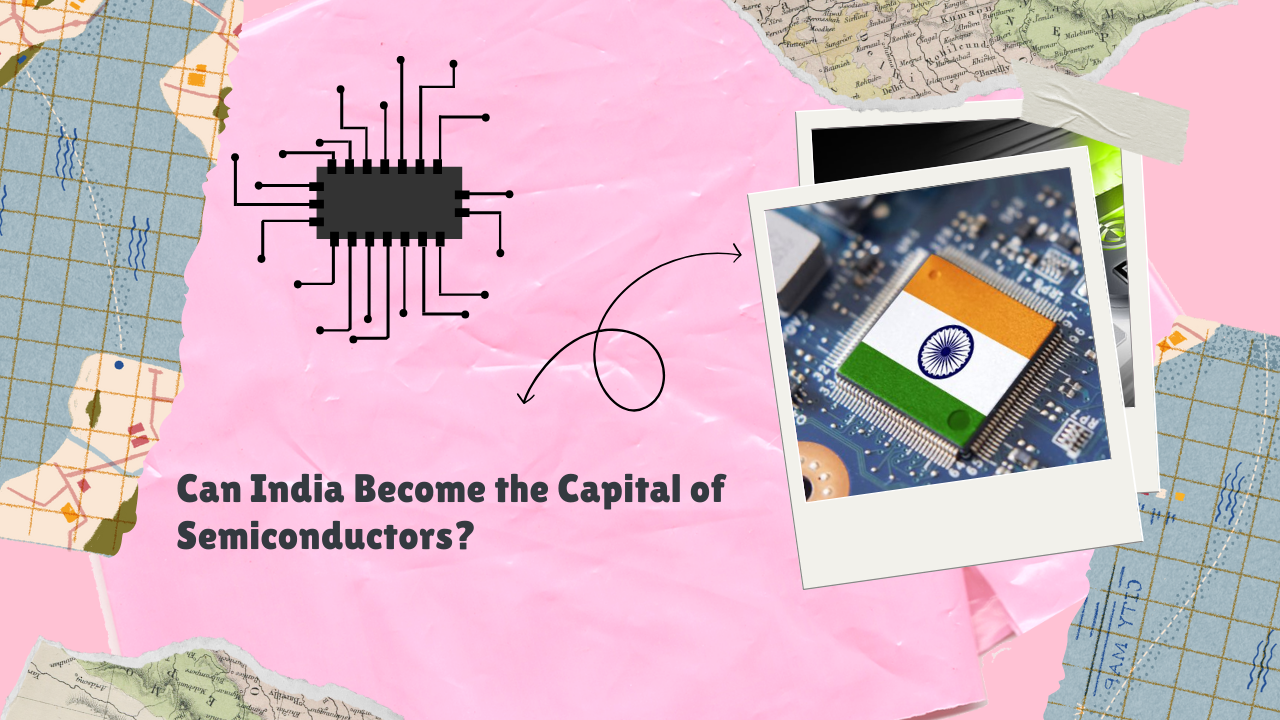
India's ambition to become a global leader in the semiconductor industry is no longer just a distant dream. With the right steps and strategic planning, India has the potential to emerge as a significant player in the global semiconductor market.
The Current Semiconductor Landscape in India
India's semiconductor industry has been making notable progress in recent years. In 2024, the country announced its first semiconductor fabrication unit, along with multiple Assembly, Testing, Marking and Packaging (ATMP) and Outsourced Semiconductor Assembly and Test (OSAT) facilities. These developments have attracted investments exceeding INR 1.26 lakh crore, positioning India as an attractive destination for global semiconductor investments.
The Indian electronics and semiconductors market is experiencing rapid growth, with a projected Compound Annual Growth Rate (CAGR) of 25% through 2028.
This growth is driven by the increasing demand for smaller electronic devices, the rising penetration of the Internet of Things, and the emergence of advanced consumer products.
The Potential for Growth
India's semiconductor market, currently valued at USD 41.2 billion, is projected to grow at a CAGR of about 19%. The demand for semiconductors is expected to cross $80 billion by 2026 and $110 billion by 2030. This growth is fueled by high demand from sectors like automotive, electronics, telecommunications, and renewable energy.
Steps Needed to Make India a Semiconductor Capital
To transform India into a semiconductor capital, several crucial steps need to be taken:
1. Scaling Up Production Linked Incentive (PLI) Schemes
The PLI scheme has been instrumental in attracting global manufacturers and building a strong domestic ecosystem. To compete with global giants like the US and China, India should consider scaling up this scheme. The industry is expecting an additional USD 20 billion allocation over the next few years. This increased incentive allocation pool can help India attract more investments across the semiconductor space and strengthen its position in the global market.
2. Developing a Robust Manufacturing Ecosystem
The Indian government is focusing on establishing a robust semiconductor manufacturing ecosystem. This includes setting up industrial parks, testing facilities, and R&D centers. The government has already approved the establishment of three new semiconductor manufacturing facilities under the country's flagship incentive program. These facilities are expected to create direct employment of 20,000 advanced technology jobs and about 60,000 indirect jobs.
3. Enhancing Skilled Workforce
India already boasts a skilled workforce of 85,000 semiconductor experts. However, to become a semiconductor capital, it needs to further expand talent pool. This can be achieved through:
Collaborations between industry and academia
Specialized training programs in semiconductor design and manufacturing
Attracting global talent and encouraging knowledge transfer
4. Investing in Research and Development
To stay competitive in the rapidly evolving semiconductor industry, India needs to invest heavily in R&D. This includes:
Setting up advanced research facilities
Encouraging innovation in areas like artificial intelligence, Internet of Things, cloud computing, and cybersecurity
Promoting collaboration between research institutions and industry players
5. Strengthening International Partnerships
India has already taken steps in this direction by signing a memorandum of understanding (MoU) with the US in March 2023, establishing a semiconductor supply chain and innovation partnership. Such international collaborations can help India access advanced technologies, share knowledge, and integrate into global semiconductor supply chains.
6. Addressing Infrastructure Challenges
One of the key challenges India faces is the lack of infrastructure support. To overcome this, the government needs to focus on:
Developing specialized industrial parks for semiconductor manufacturing
Ensuring uninterrupted power supply and water resources
Improving logistics and transportation networks
7. Encouraging Domestic Demand
While focusing on exports is important, nurturing domestic demand is equally crucial. This can be achieved by:
Promoting the use of locally manufactured semiconductors in various industries
Offering incentives to companies that use domestically produced semiconductors
Developing applications and products that require advanced semiconductor technologies
8. Streamlining Regulatory Processes
To attract more investments and facilitate ease of doing business, India needs to:
Simplify regulatory processes for setting up semiconductor manufacturing units
Offer single-window clearances for approvals and licenses
Ensure transparent and consistent policies
9. Focusing on Specialized Segments
While competing in advanced semiconductor manufacturing might be challenging initially, India can focus on specialized segments where it has a competitive advantage. This includes:
Assembly, Testing, Marking and Packaging (ATMP) facilities
Outsourced Semiconductor Assembly and Test (OSAT) units
Design of integrated circuits and embedded systems
10. Promoting Sustainability
As the world moves towards more sustainable practices, India can position itself as a leader in green semiconductor manufacturing by:
Investing in renewable energy sources for semiconductor facilities
Developing eco-friendly manufacturing processes
Focusing on the production of semiconductors for clean energy applications
State-Level Initiatives
Several Indian states are taking the lead in promoting semiconductor manufacturing:
Tamil Nadu has introduced a comprehensive semiconductor policy featuring financial incentives, infrastructure development, and talent programs.
Gujarat, through its Vibrant Gujarat initiative and the Gujarat Semiconductor Policy 2022-27, is attracting major investments and creating a 'Semicon City'.
Odisha is offering incentives such as land cost reimbursement and subsidized power tariffs, capitalizing on its deep-water ports and industrial corridors.
Karnataka and Maharashtra are also actively pursuing growth in the semiconductor industry with distinct strategies.
Challenges to Overcome
While the potential is immense, India faces several challenges in its journey to become a semiconductor capital:
High initial investment costs for setting up semiconductor fabrication units
Competition from established players like Taiwan, South Korea, and China
Need for continuous technological upgradation.
Ensuring a stable supply of raw materials
Balancing environmental concerns with industrial growth
The Road Ahead
India's path to becoming a semiconductor capital is challenging but not impossible. The country's large and growing market, coupled with government initiatives and a skilled workforce, provides a strong foundation. By focusing on strategic investments, developing a robust ecosystem, and fostering innovation, India can position itself as a major player in the global semiconductor industry.
The recent approval of three new semiconductor units and the government's commitment to the sector are positive steps in this direction. As Prime Minister Narendra Modi highlighted at SEMICON India 2024, India's favorable ecosystem, ease of doing business, and skilled workforce have already attracted significant investments.
While becoming the capital of semiconductors is an ambitious goal, India has the potential to emerge as a significant player in the global semiconductor market. By taking the right steps and addressing the challenges, India can create a thriving semiconductor industry that not only meets domestic demand but also contributes significantly to global supply chains. The journey may be long, but with sustained efforts and strategic planning, India can certainly make its mark in the world of semiconductors.
About the author
- LLMs • AI Agents • RAG • LangChain • LangGraph • Fine-Tuning • Reinforcement Learning • Python • APIs
Comments
Join the discussionawesome
Thanks!!